
You find the perfect cocktail recipe.
You have the spirit.
You have the ice.
You are ready to make the drink.
Then you notice one problem.
You are missing one ingredient.
Maybe the recipe asks for simple syrup and you only have sugar. Maybe you need lime juice but only have lemons. Or perhaps a cocktail calls for triple sec, vermouth or bitters that simply are not part of your home bar yet.
That does not always mean you need to choose another drink.
Many cocktail ingredients can be substituted — as long as you understand what that ingredient is doing in the recipe.
Some ingredients provide sweetness. Others add acidity, bitterness, aroma, texture or alcohol.
Once you understand the role of an ingredient, finding a good replacement becomes much easier.
Here are some of the most useful cocktail substitutions to know.
Why Cocktail Substitutions Work
A cocktail recipe is more than a list of ingredients.
Most drinks are built around a balance of several elements:
- Spirit
- Sweetness
- Acidity
- Bitterness
- Dilution
- Aroma
When you replace an ingredient, your goal should not always be to find something that tastes identical.
Instead, try to replace its function.
For example, if a recipe needs simple syrup, you need sweetness.
If it needs lime juice, you need acidity and citrus character.
If it calls for vermouth, you may need sweetness, herbal complexity or both.
Thinking this way gives you much more flexibility behind the bar.
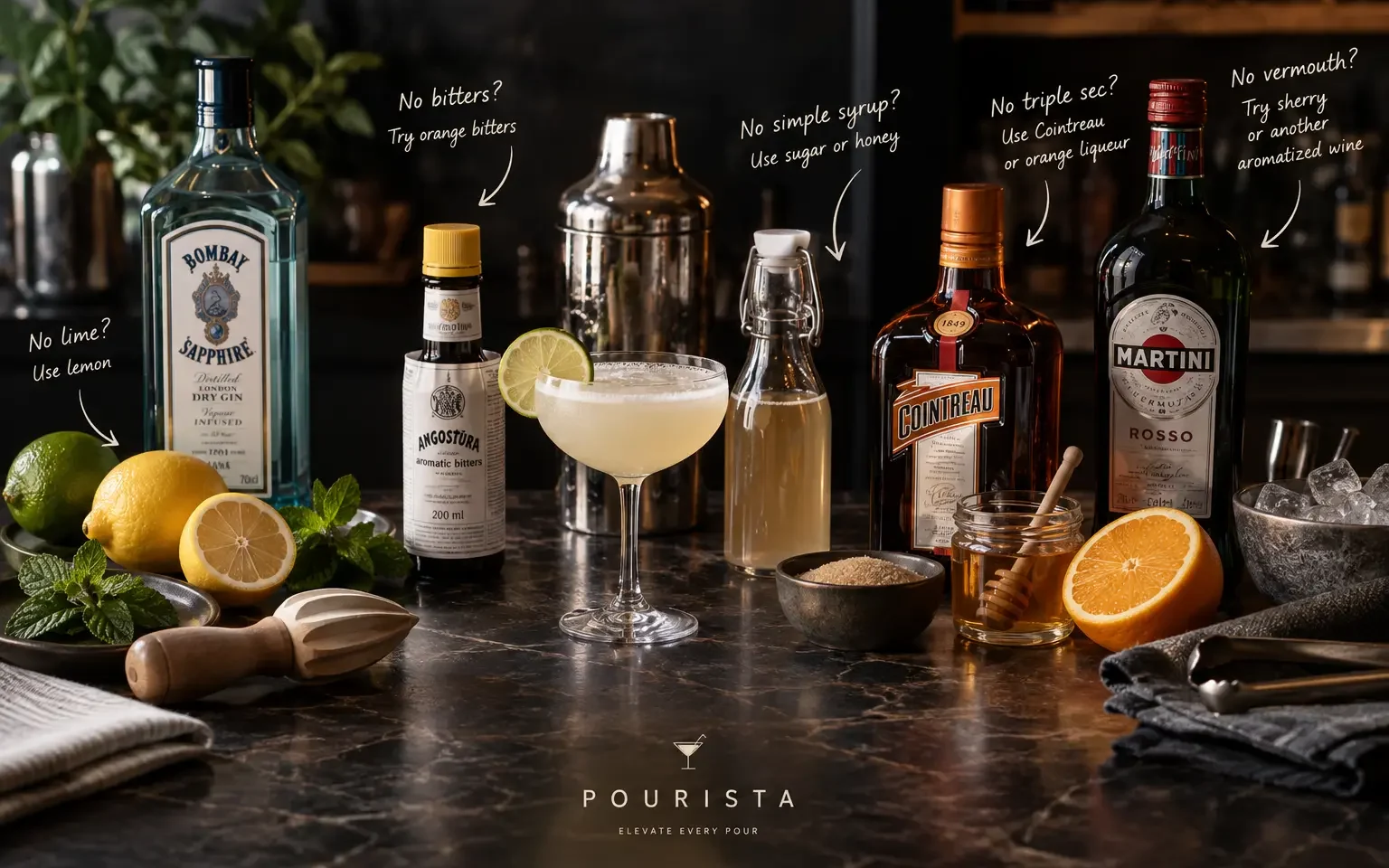
1. Simple Syrup Substitute
Simple syrup is one of the easiest cocktail ingredients to replace.
It is normally just sugar dissolved in water.
Best substitutes:
- Sugar
- Honey syrup
- Maple syrup
- Agave syrup
- Brown sugar syrup
If you only have regular sugar, you can usually make simple syrup in minutes.
Mix roughly equal parts sugar and warm water until the sugar dissolves.
Important:
Different sweeteners have different levels of sweetness.
Maple syrup and honey also add their own flavor, so start with a slightly smaller amount and adjust.
Works well in:
- Whiskey Sour
- Daiquiri
- Mojito
- Collins-style drinks
- Old Fashioned
2. Lime Juice Substitute
Fresh lime juice is common in tropical, tequila and rum cocktails.
If you do not have lime, the best substitute is usually:
Lemon juice
The flavor will change, but the acidity is similar enough for many recipes.
You can often substitute lemon juice at roughly the same volume.
Good alternatives:
- Lemon juice
- Grapefruit juice with extra acidity
- Citric acid solution
- Bottled lime juice in emergencies
Fresh citrus will usually produce the best result.
Works well for:
- Daiquiri variations
- Mojito variations
- Margarita-style drinks
- Rum cocktails
3. Lemon Juice Substitute
The most obvious replacement is:
Fresh lime juice
Again, the drink will taste different, but structurally it often works.
Lemon is usually softer and less sharply aromatic than lime.
You can also experiment with grapefruit juice, although grapefruit is less acidic and may require adjustments.
4. Triple Sec Substitute
Triple sec is an orange-flavored liqueur used in many cocktails.
Examples include Cointreau and other orange liqueurs.
If you do not have triple sec, possible alternatives include:
- Cointreau
- Grand Marnier
- Curaçao
- Orange liqueur
- Orange syrup plus extra spirit
- Orange juice with a small amount of sweetener
The last two will not perfectly recreate triple sec because they lack the alcoholic intensity and concentrated orange oils.
But for casual home cocktails, they can sometimes work surprisingly well.
5. Cointreau Substitute
Cointreau is a premium orange liqueur.
You can usually replace it with:
- Triple sec
- Dry curaçao
- Grand Marnier
- Another orange liqueur
Grand Marnier has a richer, brandy-based character, so expect a heavier drink.
Triple sec generally creates a lighter substitution.
6. Vermouth Substitute
This one depends heavily on whether the recipe uses sweet vermouth or dry vermouth.
Sweet Vermouth Substitute
Possible alternatives:
- Another aromatized wine
- Port in some whiskey cocktails
- Sherry
- Red wine with a touch of sugar and bitters
None of these are exact replacements.
Sweet vermouth has a complex combination of wine, herbs, spices and sweetness.
But in some cocktails, the alternatives can still create an interesting drink.
Dry Vermouth Substitute
Try:
- Dry sherry
- Lillet Blanc
- Another dry fortified wine
- A small amount of dry white wine
This works best when the vermouth is not the dominant ingredient.
7. Bitters Substitute
Bitters are difficult to replace because even a few drops can significantly change a cocktail.
If you do not have Angostura bitters, possible alternatives include:
- Orange bitters
- Aromatic bitters from another brand
- A tiny amount of amaro
- Strong herbal tincture
For something like an Old Fashioned, bitters are important.
But if you are simply experimenting at home, another bitter or herbal ingredient may help restore some complexity.
8. Tonic Water Substitute
Tonic water contains quinine, which creates its characteristic bitterness.
If you do not have tonic, there is no perfect substitute.
But depending on the drink, you can try:
- Soda water
- Sparkling water
- Lemon-lime soda
- Bitter lemon
- Ginger ale
A Gin & Soda will obviously taste very different from a Gin & Tonic, but it can still be a refreshing drink.
9. Soda Water Substitute
This is easier.
Try:
- Sparkling mineral water
- Seltzer
- Carbonated water
- Very lightly flavored sparkling water
Avoid strongly flavored sparkling drinks unless you intentionally want to change the cocktail.
10. Ginger Beer Substitute
Ginger beer provides both sweetness and a strong ginger character.
Possible replacements include:
- Ginger ale
- Ginger syrup + soda water
- Fresh ginger + simple syrup + soda
- Spicy ginger soft drink
Ginger ale will generally produce a softer and sweeter drink than ginger beer.
11. Grenadine Substitute
Real grenadine is traditionally based on pomegranate.
Possible replacements:
- Pomegranate syrup
- Pomegranate juice + sugar
- Raspberry syrup
- Cranberry syrup
- Cherry syrup
These alternatives will change the flavor, but they can provide similar sweetness and color.
12. Agave Syrup Substitute
Agave is especially popular in tequila cocktails.
Replace it with:
- Simple syrup
- Honey syrup
- Maple syrup
- Sugar syrup
For Margaritas, simple syrup is usually the easiest alternative.
13. Honey Syrup Substitute
Honey syrup is simply diluted honey.
If you do not have it, use:
- Simple syrup
- Agave
- Maple syrup
- Regular honey diluted with warm water
Avoid adding thick honey directly to a cold cocktail because it may not dissolve properly.
14. Egg White Substitute
Egg white is used for texture and foam in cocktails such as Whiskey Sours.
The most popular non-egg alternative is:
Aquafaba
Aquafaba is the liquid from cooked chickpeas.
It can create foam surprisingly similar to egg white.
A small amount is usually enough.
Another option is a commercial cocktail foaming agent.
15. Fresh Mint Substitute
If a drink calls for mint and you have none, you have fewer options.
Try:
- Basil
- Mint syrup
- Herbal liqueur
- Another fresh aromatic herb
Basil can work particularly well with gin, citrus and fruit.
Do not expect it to taste like mint — treat it as a variation rather than a direct replacement.
16. Coffee Liqueur Substitute
Cocktails such as the Espresso Martini often use coffee liqueur.
If you do not have one, try:
- Strong espresso + simple syrup
- Cold brew concentrate + sugar
- Coffee syrup
- Espresso + a little rum or vodka
You may need to adjust the sweetness.
17. Coconut Cream Substitute
For tropical cocktails, possible substitutes include:
- Coconut milk
- Coconut cream
- Coconut syrup
- Heavy cream + coconut syrup
Be careful with coconut milk because it is usually thinner and less sweet than cream of coconut.
18. Pineapple Juice Substitute
Try:
- Orange juice
- Mango juice
- Passion fruit juice
- Apple juice
- A tropical juice blend
You will lose pineapple’s characteristic acidity and sweetness, so adjust citrus and sugar if necessary.
19. Orange Juice Substitute
Depending on the cocktail:
- Mandarin juice
- Tangerine juice
- Pineapple juice
- Grapefruit juice
- Blood orange juice
Grapefruit is less sweet and more bitter, so it may require additional sweetener.
20. Cocktail Garnish Substitute
Garnishes are often more flexible than people think.
If the recipe asks for a lime wheel but you only have lemon, use lemon.
If you do not have fresh citrus:
- Citrus peel
- Fresh herbs
- Berries
- Dehydrated fruit
- Cocktail cherry
The goal is usually aroma and presentation.
Do not let a missing garnish stop you from making the drink.
How to Know Whether a Substitute Will Work
Before replacing an ingredient, ask three questions.
1. Is the ingredient sweet?
If yes, replace it with another sweetener.
2. Is it acidic?
Look for another citrus or acidic ingredient.
3. Is it adding flavor rather than structure?
Then you have more freedom.
Vermouth, bitters and liqueurs are harder to replace because they contribute complex flavors.
Simple syrup and soda water are much easier.
The 1:1 Substitution Rule Is Not Always Correct
One important mistake beginners make is replacing everything in equal amounts.
That is not always a good idea.
For example:
1 oz of lemon juice and 1 oz of grapefruit juice do not provide the same acidity.
Likewise, honey syrup and simple syrup may not have the same sweetness.
Whenever you substitute an ingredient:
Start with less. Taste. Then adjust.
Cocktail making is much easier when you treat the first version as a starting point rather than a final formula.
When You Should Not Substitute
Some cocktails depend heavily on a particular ingredient.
A Negroni without a bitter Italian aperitif will no longer taste like a Negroni.
A Martini without vermouth becomes a completely different drink.
An Aperol Spritz without Aperol is no longer really an Aperol Spritz.
That does not mean the drink will be bad.
It simply means you have created a variation.
And that is perfectly fine.
Just think of it as a new cocktail rather than an exact reproduction.
How to Make Better Substitutions at Home
The easiest way is to organize your ingredients by purpose.
Sweet
- Simple syrup
- Honey
- Agave
- Maple syrup
- Liqueurs
Sour
- Lemon
- Lime
- Grapefruit
- Other acidic juices
Bitter
- Bitters
- Amaro
- Bitter aperitifs
Herbal
- Vermouth
- Herbal liqueurs
- Fresh herbs
Carbonated
- Soda water
- Tonic
- Ginger beer
- Sparkling wine
Once you think in categories, improvising becomes much easier.
A Better Way to Discover Drinks
You should not have to abandon a cocktail just because you are missing one bottle.
Nor should you need to buy an entire collection of ingredients before enjoying your home bar.
The smartest approach is to understand what you have, what each ingredient does and which substitutions make sense.
That turns cocktail making from recipe-following into something much more flexible.
And much more fun.
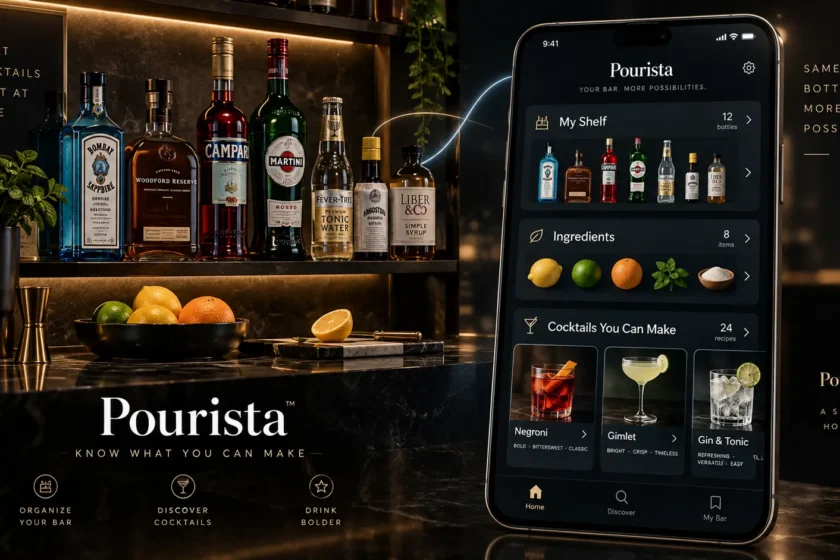
With Pourista, the goal is to make that discovery easier — helping you understand what your ingredients can become instead of forcing you to start with the perfect recipe.
Start with what you have. Discover what you can make. Elevate Every Pour.