
Most people do not need a bigger home bar.
They need a smarter way to use what they already have.
A bottle of gin, half a lemon, a little sugar, some mint, a forgotten jar of honey, a few mixers in the fridge — these small ingredients can become far more than random leftovers. With the right approach, they can turn into refreshing highballs, simple sours, elegant mocktails, low-effort spritzes, and drinks that feel intentional instead of improvised.
That is the real beauty of drink creation: you do not always need rare ingredients or professional equipment. You need to understand possibilities.
Start With What You Have
Before searching for a recipe, look at your shelf.
Most drinks are built from a few simple categories:
- A base ingredient
- Something acidic
- Something sweet
- Something aromatic
- Something sparkling or diluted
- A garnish or finishing touch
Once you understand these roles, your ingredients become more flexible.
Lemon is not just lemon. It is acidity, brightness, and structure.
Honey is not just sweetness. It adds body, softness, and depth.
Mint is not just a garnish. It brings aroma before the first sip.
Sparkling water is not just a mixer. It can lighten, lengthen, and balance a drink.
This is how bartenders think. They do not only ask, “What recipe can I follow?” They ask, “What can this ingredient do?”
The Problem With Traditional Recipe Searching
Traditional recipe websites usually start with the finished drink.
You search for a Mojito, Negroni, Margarita, Old Fashioned, or Espresso Martini. Then you check the ingredients and realize you are missing one or two key items.
That experience is frustrating.
It puts the recipe first and your reality second.
A better method is ingredient-first discovery.
Instead of asking:
“What do I need to buy to make this drink?”
Ask:
“What can I make with what I already have?”
That shift changes everything.
It saves money, reduces waste, and makes drink creation feel easier. It also helps you learn faster because you begin to understand patterns between ingredients, not just individual recipes.
Think in Drink Families
You do not need to memorize hundreds of recipes.
Start by understanding drink families.
Sours
A sour usually combines spirit, citrus, and sweetness.
Examples include whiskey sour, gin sour, daiquiri, and many simple shaken cocktails.
Basic structure:
- Spirit
- Lemon or lime
- Sugar, syrup, honey, or another sweetener
Once you understand this, you can adapt.
No simple syrup? Use honey syrup.
No lime? Try lemon.
No whiskey? Try gin, rum, or even a non-alcoholic base.
Highballs
A highball is built around a base ingredient and a carbonated mixer.
Basic structure:
- Spirit or non-alcoholic base
- Sparkling mixer
- Ice
- Optional citrus or garnish
This is one of the easiest formats for home drink creation.
Gin and tonic, whiskey soda, rum and cola, tequila soda, and many low-alcohol drinks follow this logic.
Spritzes
A spritz is light, refreshing, and usually built with something bitter, sparkling, or aromatic.
Basic structure:
- Bitter or flavored base
- Sparkling wine or soda
- Ice
- Citrus or herb garnish
Even without classic spritz ingredients, you can build spritz-style drinks using tea, fruit syrups, citrus, soda, and herbs.
Stirred Drinks
Stirred drinks are spirit-forward and usually stronger.
Basic structure:
- Base spirit
- Bitter, sweet, or aromatic modifier
- Ice
- Garnish
These drinks are more about balance and dilution than freshness. If you enjoy deeper, slower drinks, this is a useful category to learn.
Build a Flexible Home Bar
A smart home bar is not about owning everything.
It is about having flexible ingredients that work in many combinations.
Start with a few useful categories.
Citrus
Lemon and lime are two of the most important ingredients for home drinks. They bring balance, freshness, and structure.
If you only keep one citrus at home, choose lemon. It works across cocktails, mocktails, teas, sodas, and simple mixed drinks.
Sweeteners
Simple syrup is useful, but it is not the only option.
You can use:
- Honey syrup
- Maple syrup
- Sugar syrup
- Agave
- Fruit syrup
- Jam diluted with water
Sweetness is not only about making a drink taste sweet. It balances acidity, bitterness, and alcohol.
Carbonation
Sparkling water, tonic, ginger beer, cola, and soda can turn basic ingredients into finished drinks quickly.
A good mixer can save a simple drink.
Aromatics
Mint, basil, rosemary, cucumber, citrus peel, bitters, tea, coffee, and spices can add personality.
Small aromatic details often make a drink feel crafted.
Base Ingredients
For alcoholic drinks, this may be gin, rum, whiskey, vodka, tequila, vermouth, or liqueurs.
For non-alcoholic drinks, it may be tea, coffee, fruit juice, soda, kombucha, non-alcoholic spirits, or infused water.
The base sets the direction. The supporting ingredients create the experience.
Use the “One Missing Ingredient” Rule
When you find a recipe, do not reject it immediately because you are missing something.
Ask whether the missing ingredient plays a role you can replace.
Missing simple syrup? Use honey syrup.
Missing lime? Try lemon, but adjust sweetness.
Missing mint? Use basil or cucumber for freshness.
Missing tonic? Try soda water with citrus and a little syrup.
Missing bitters? Add citrus peel, tea, spice, or a small aromatic element.
Not every substitution will be perfect. But many will be good enough to create something enjoyable and personal.
This is how your home bar becomes more useful.
Better Drinks Come From Better Decisions
A good drink is not only about ingredients.
It is about balance.
A drink usually fails for one of four reasons:
- It is too sweet.
- It is too sour.
- It is too strong.
- It feels flat.
The solution is usually simple.
Too sweet? Add acidity or dilution.
Too sour? Add sweetness.
Too strong? Add ice, soda, or more dilution.
Too flat? Add citrus, aroma, bitterness, bubbles, or garnish.
Once you learn to adjust, you stop depending on exact recipes and start crafting drinks with confidence.
Example: Turning Simple Ingredients Into Possibilities
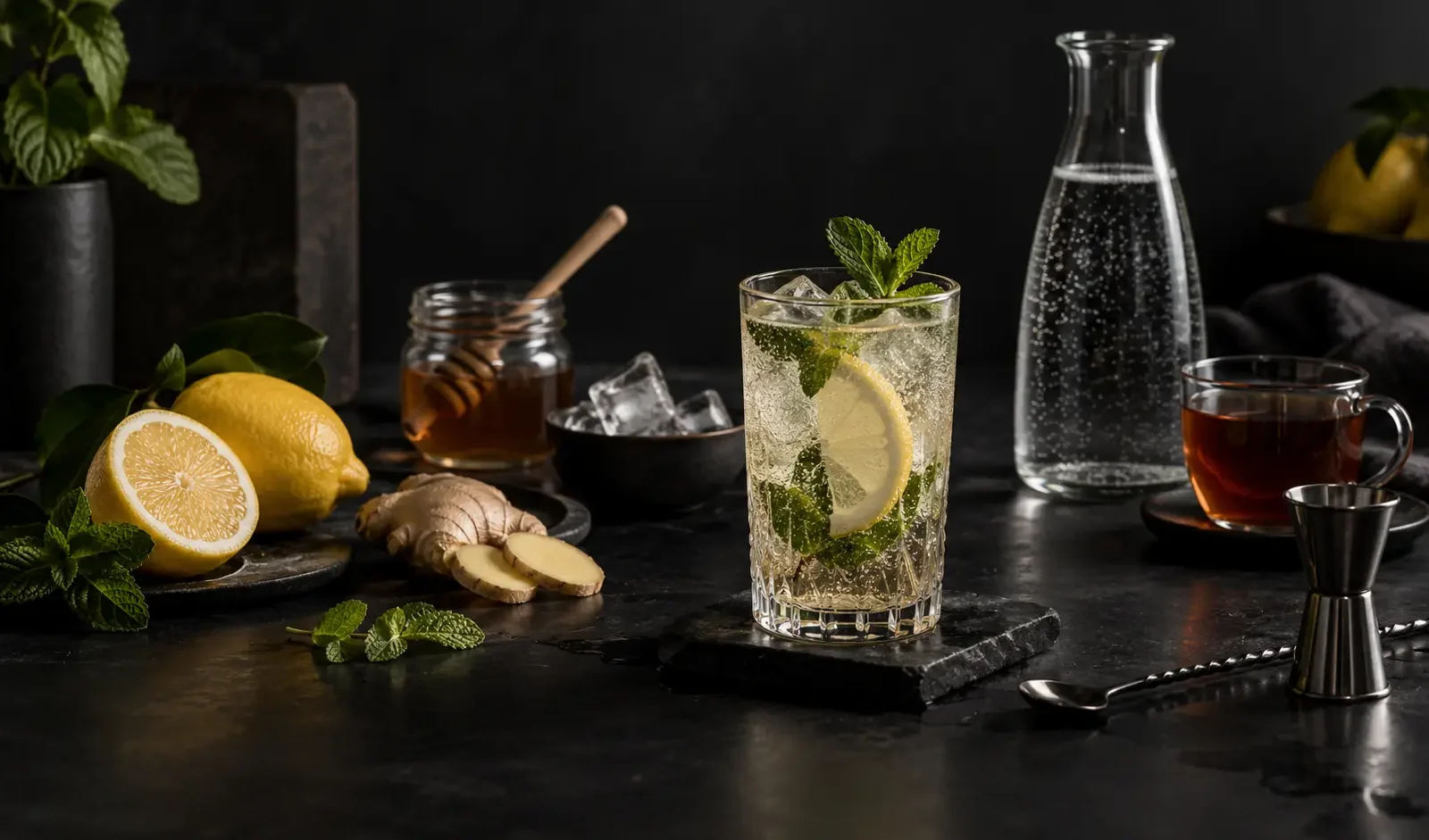
Imagine you have:
- Lemon
- Honey
- Sparkling water
- Mint
- Black tea
- Ginger
- Gin
- Ice
That small list can become several different drinks.
You could make a honey lemon gin fizz.
You could make a mint and ginger iced tea.
You could make a sparkling lemon mocktail.
You could make a gin, tea, and honey highball.
You could make a warm honey ginger drink.
Same shelf. Different outcomes.
The difference is not the number of ingredients. It is how you see them.
Where Pourista Fits In
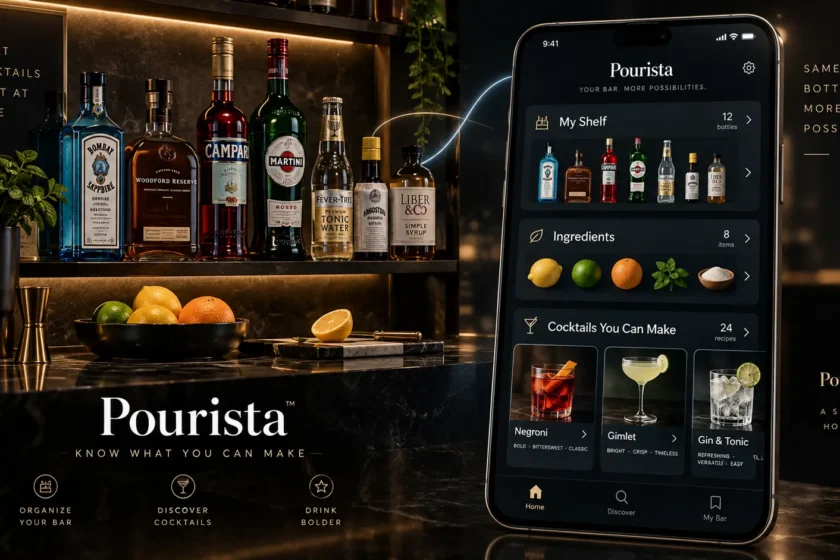
Pourista is designed around this exact problem.
Instead of forcing you to search for recipes you may not be able to make, Pourista helps you discover drinks based on your ingredients, preferences, and shelf.
It is a more practical way to explore beverage creation.
You can start with what you already have, discover what is possible, understand what you are missing, and build better drinks with more confidence.
That is the goal: not just more recipes, but better discovery.
Final Pour
You do not need a perfect bar to make better drinks.
You need a better system.
Start with your ingredients. Learn their roles. Think in drink families. Make smart substitutions. Adjust for balance. Over time, your shelf becomes more than a collection of bottles and mixers.
It becomes a creative toolkit.
And every pour becomes a little more intentional.
Elevate Every Pour.